Are Flushable Wipes Safe? Avoid Plumbing Damage Now
Flushable wipes are not safe for your plumbing system because they do not disintegrate like toilet paper. Despite marketing claims, they remain intact in water, leading to severe flushable wipes plumbing damage such as massive pipe clogs, sewer backups, and costly system failures for homeowners and municipal infrastructure alike.
Why do flushable wipes cause plumbing damage?
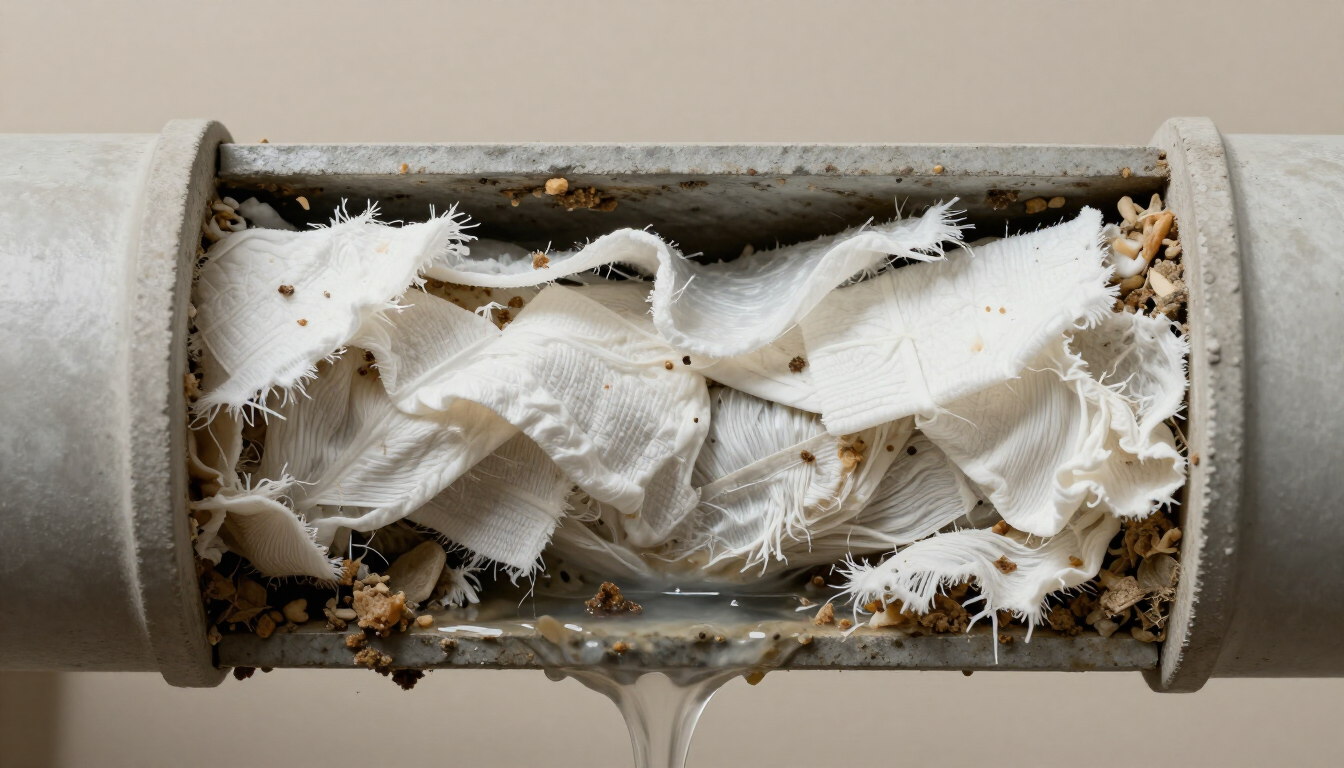
To understand why these products are so troublesome, we have to look at the physics of your bathroom plumbing. When you flush standard toilet paper, it is designed to dissolve almost immediately upon contact with water. By the time it travels through your home's internal lines and reaches the main sewer, it is essentially a pulp that flows freely. Flushable wipes, however, are engineered to be durable. They are often made of synthetic fibers, plastics, or reinforced wood pulp that resists breaking down even when agitated in a septic or sewer environment.
When these wipes enter your pipes, they don't move like water or dissolved paper. Instead, they act like a wet, heavy cloth. As they navigate the bends and joints of your plumbing, they can easily get snagged on any minor imperfection. Whether it’s a tiny bit of tree root intrusion, a rough patch of corrosion in an older iron pipe, or even just a tight elbow joint, the wipe stays put. Once one wipe gets stuck, it acts as a net, catching hair, grease, and other debris. This creates a snowball effect that quickly turns into a solid mass, leading to significant flushable wipes plumbing damage that requires professional intervention.
For residents in Northeast Georgia, where many homes have older piping systems, this issue is particularly acute. A single wipe might not stop the flow, but a week’s worth of wipes can completely seal off a four-inch sewer line. This leads to backups that aren't just messy—they are health hazards. When the water has nowhere to go, it retreats to the lowest point in your home, which is often a basement drain or a downstairs shower.
How Flushable Wipes Affect Septic Systems
Homeowners with septic systems often assume that products labeled "septic safe" or "flushable" are harmless. Unfortunately, that is rarely the case. Unlike toilet paper, which quickly breaks apart when exposed to water, most wipes remain intact for extended periods of time. As they accumulate inside a septic tank, they can reduce system efficiency and contribute to costly maintenance issues.
Over time, flushable wipes can increase the frequency of septic pumping, interfere with the natural breakdown of waste, and contribute to drain field problems. In severe situations, homeowners may face expensive repairs or premature septic system replacement. Experts routinely recommend disposing of all wipes in the trash rather than flushing them.
Common Warning Signs of a Wipe-Related Plumbing Problem
If your household regularly uses flushable wipes, watch for these signs that a blockage may be developing:
- Slow-draining toilets
- Frequent toilet clogs
- Gurgling sounds coming from drains
- Water backing up into tubs or showers
- Sewage odors inside or outside the home
- Multiple fixtures draining slowly at the same time
These symptoms often indicate a restriction somewhere within the drain or sewer line. Addressing the problem early can help prevent larger plumbing emergencies and more costly repairs.
The Three Things That Belong in Your Toilet
Most plumbing professionals follow a simple rule:
Only flush:
- Human waste
- Toilet paper
- Water
Everything else should be thrown away, including:
- Flushable wipes
- Baby wipes
- Paper towels
- Facial tissues
- Feminine hygiene products
- Cotton swabs
- Dental floss
- Cleaning wipes
While many products may physically disappear when flushed, that does not mean they are safe for your plumbing system. Plumbers consistently report wipes as one of the most common causes of drain blockages and sewer backups.
What To Do If You've Been Flushing Wipes
If you have been flushing wipes for months or years, don't panic. Many homeowners are unaware of the problems these products can create because the packaging often suggests they are safe to flush.
If you begin noticing slow drains, recurring clogs, or sewer odors, scheduling a professional plumbing inspection can help identify developing issues before they become major repairs. A sewer camera inspection can locate blockages, while professional drain cleaning or hydro jetting may remove accumulated debris before significant damage occurs.
Trust MasterCraft Plumbing for Professional Drain and Sewer Services
At MasterCraft Plumbing, we help homeowners throughout Jefferson, Commerce, Athens, Winder, Braselton, Hoschton, Gainesville, and Northeast Georgia diagnose and resolve drain and sewer problems caused by wipes, grease buildup, root intrusion, and other common plumbing issues.
Whether you need professional drain cleaning, sewer camera inspections, hydro jetting services, or emergency plumbing repairs, our experienced team is ready to help protect your home and keep your plumbing system flowing properly.
Final Verdict: Are Flushable Wipes Really Flushable?
Despite the marketing claims on the packaging, the answer is simple: flushable wipes are not truly plumbing-safe. Studies, wastewater professionals, and plumbers consistently report that wipes do not break down like toilet paper and can contribute to costly clogs, sewer backups, septic system problems, and infrastructure damage.
The safest place for any wipe is the trash can...not your toilet.
If you're experiencing slow drains, recurring toilet clogs, or sewer line concerns, contact MasterCraft Plumbing today by giving us a call at 404-456-1144. Our licensed plumbing professionals are here to provide reliable solutions that protect your home and prevent expensive plumbing emergencies.